A well-maintained wax jacket is very good at dealing with showers and changeable weather, but a traditional waxed-cotton jacket should not be treated as the same thing as a fully waterproof technical shell.
The distinction matters. Waxed cotton relies heavily on the condition of its wax finish to repel water. As that finish becomes dry, worn or patchy, the jacket's ability to shed rain reduces. Regular care and occasional re-waxing are therefore part of owning a traditional wax jacket.
Are wax jackets waterproof? In practical terms, think of traditional waxed cotton as weather-resistant rather than fully waterproof. A properly maintained jacket can handle showers and everyday changeable weather very well, but prolonged heavy rain is where a purpose-built waterproof shell becomes the more appropriate choice.
How does waxed cotton resist rain?
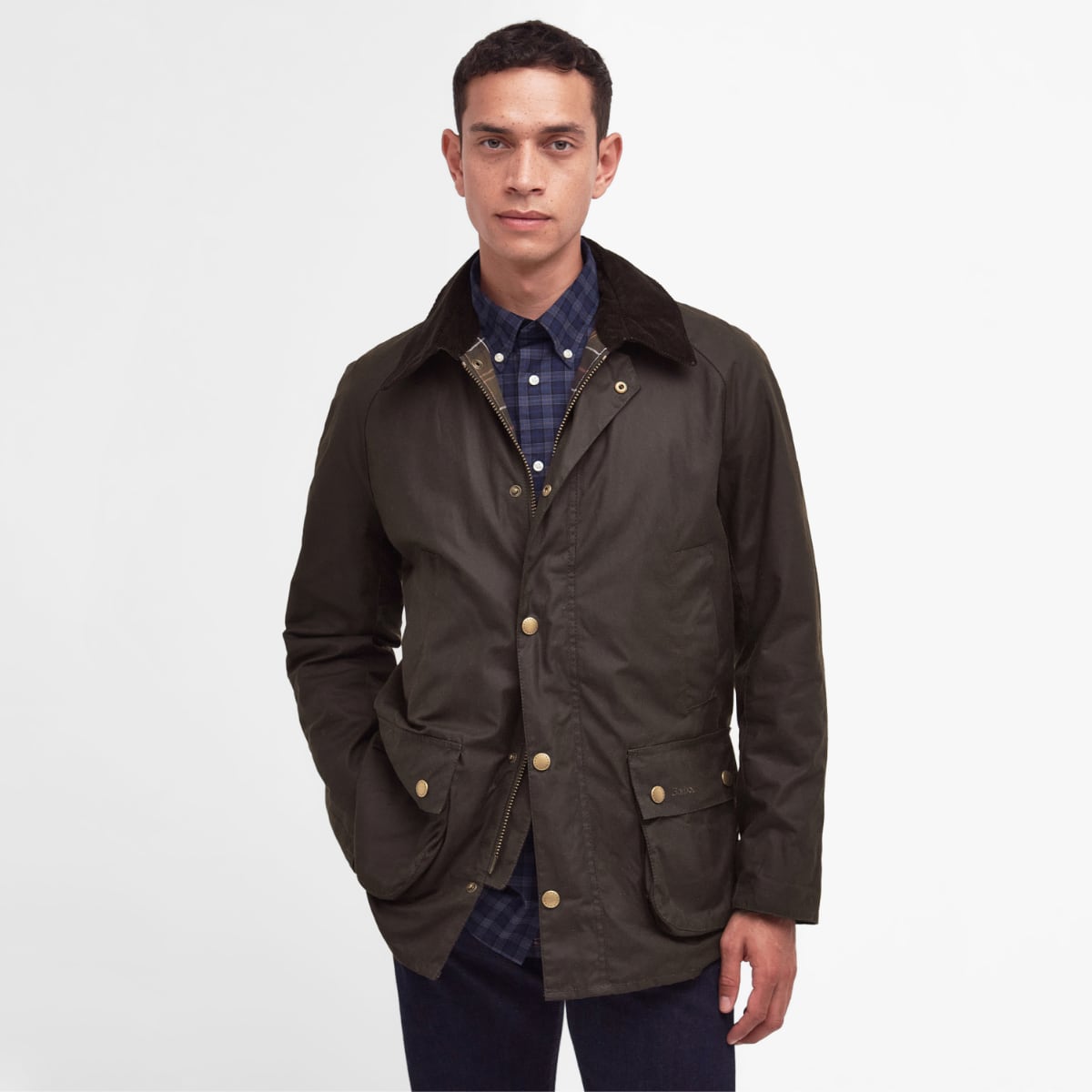
Waxed cotton starts with a woven cotton fabric that is treated with wax. The treatment changes the way the surface deals with moisture, helping rain form droplets and run from the jacket rather than immediately soaking into the fibres.
The wax also gives the fabric its distinctive feel and appearance. Depending on the particular finish, a wax jacket may look smooth and relatively crisp or softer and more matte. As the jacket is worn, folds, creases and areas of heavier use develop their own character.
Barbour's relationship with protective outerwear dates back to the company's beginnings in South Shields in 1894, when weather protection for fishermen, mariners and other people working in exposed conditions formed an important part of the company's early business. Waxed jackets remain one of the best-known parts of that heritage.
That history does not mean every modern Barbour wax jacket is a waterproof technical garment. The important point is that waxed cotton provides a traditional form of weather protection with its own strengths, limitations and maintenance requirements.
Water-resistant vs waterproof: what is the difference?
The terms are sometimes used as though they mean the same thing, but they should not be.
A traditional waxed jacket provides useful resistance to rain by using its waxed outer fabric to repel water. That makes it well suited to showers, damp conditions and the sort of unsettled weather in which many customers wear a Barbour jacket day to day.
A modern technical waterproof jacket is built specifically to prevent water penetration, usually using a waterproof membrane or coating together with appropriate seam construction and other weather-protective details.
For that reason, describing every waxed jacket simply as “waterproof” can create the wrong expectation.
The practical distinction: if you want a traditional jacket for everyday showers, country walks and changeable weather, a well-maintained wax jacket can be an excellent choice. If you expect to spend hours in sustained heavy rain and staying dry is the principal requirement, choose a genuine technical waterproof jacket.
How much rain can a wax jacket handle?
There is no useful rule stating that a wax jacket will keep out rain for a fixed number of minutes or hours. Its performance depends on the jacket, the condition of the wax, how intense the rain is and how long you remain exposed.
A freshly maintained wax jacket should shed ordinary showers effectively. You will often see droplets beading on the surface and running away rather than immediately darkening and soaking into the cotton.
Prolonged or heavy rain is more demanding. Water has more opportunity to find areas where the wax has worn thin, as well as seams, openings and parts of the jacket experiencing repeated movement or abrasion.
This does not make waxed cotton ineffective. It simply means it should be used for the conditions it was designed to handle rather than judged against a different type of garment.
Why the condition of the wax matters
This is one of the most important things to understand about a wax jacket.
The wax finish is not simply there to give the fabric its traditional appearance. It is central to the jacket's ability to repel water.
With regular wear, the wax gradually moves, wears away and dries out. Areas exposed to the most friction tend to show this first. Shoulders, elbows, cuffs, seams, pocket edges and other heavily used areas may begin to look lighter or feel noticeably drier than the surrounding fabric.
Once a wax jacket becomes dry, its water repellency reduces. Leaving the jacket indefinitely without maintenance therefore changes more than its appearance.
If a wax jacket that previously shed rain well starts absorbing moisture readily or develops visibly pale, dry and patchy areas, check the condition of the wax before assuming the garment itself has failed.
How do you know when a wax jacket needs re-waxing?
There is no need to re-wax a jacket according to a rigid calendar. How quickly the finish wears depends on how often the jacket is worn, where it is used and how it is stored.
Useful signs include:
- The fabric looks noticeably dry or pale in particular areas.
- Rain no longer beads as readily on the surface.
- High-wear areas feel different from parts of the jacket where the wax is still healthy.
- The finish has become visibly uneven around seams, shoulders, elbows or pocket edges.
Re-waxing replenishes the finish and helps restore the jacket's weather resistance. It also allows you to concentrate additional attention on the areas that have lost the most wax.
For the complete process, including cleaning, drying, re-waxing and storage, see our guide to looking after a Barbour wax jacket.
Wax jacket vs technical waterproof shell
The better choice depends on what you need the jacket to do. Neither design is universally superior.
The table below shows the main practical differences rather than treating the two types of jacket as direct equivalents.
| Consideration | Waxed cotton jacket | Technical waterproof shell |
|---|---|---|
| Everyday showers | A strong use case when the wax finish is properly maintained. | Well suited, although potentially more technical than necessary for casual use. |
| Prolonged heavy rain | More limited, particularly as the wax finish wears. | The better choice when the garment is specifically designed and verified as waterproof. |
| Maintenance | Needs periodic re-waxing to maintain the traditional protective finish. | Care varies by fabric and membrane; some garments require periodic cleaning and reproofing. |
| Appearance | Traditional, understated and develops character with wear. | Usually more overtly technical in fabric and construction. |
| Typical use | Countrywear, everyday use, travel and changeable weather. | Sustained wet-weather protection and more demanding outdoor conditions. |
When is a wax jacket the better choice?
The strongest reason to choose waxed cotton is not that it outperforms every modern fabric. It is that it offers a particular combination of weather resistance, durability, traditional appearance and long-term maintainability.
A wax jacket may suit you if...
- You mainly need protection from showers and changeable weather.
- You want a jacket that works naturally with countrywear and everyday clothing.
- You appreciate a fabric that develops character as it ages.
- You are happy to clean and re-wax the jacket when required.
- You want something suitable for regular town and country use rather than a dedicated technical shell.
A waterproof shell may suit you better if...
- You expect prolonged exposure to heavy rain.
- Reliable waterproof protection is your main priority.
- You are hillwalking, trekking or spending extended periods in exposed conditions.
- You prefer lightweight technical construction over traditional waxed cotton.
- You do not want the maintenance associated with periodically re-waxing a jacket.
For many customers, the two types of jacket serve different purposes. Owning a wax jacket for everyday and country use does not prevent a technical waterproof from being the better garment when the forecast calls for hours of heavy rain.
Examples of Barbour wax jackets
Waxed cotton appears across a wide range of Barbour designs. The same broad maintenance principle applies, but individual jackets can differ considerably in fit, length, warmth and construction.
Barbour Ashby Waxed Jacket
The Ashby uses Barbour's 6oz Sylkoil waxed cotton and combines traditional wax-jacket details with a closer, more tailored shape than styles such as the Bedale and Beaufort.
View the Barbour Ashby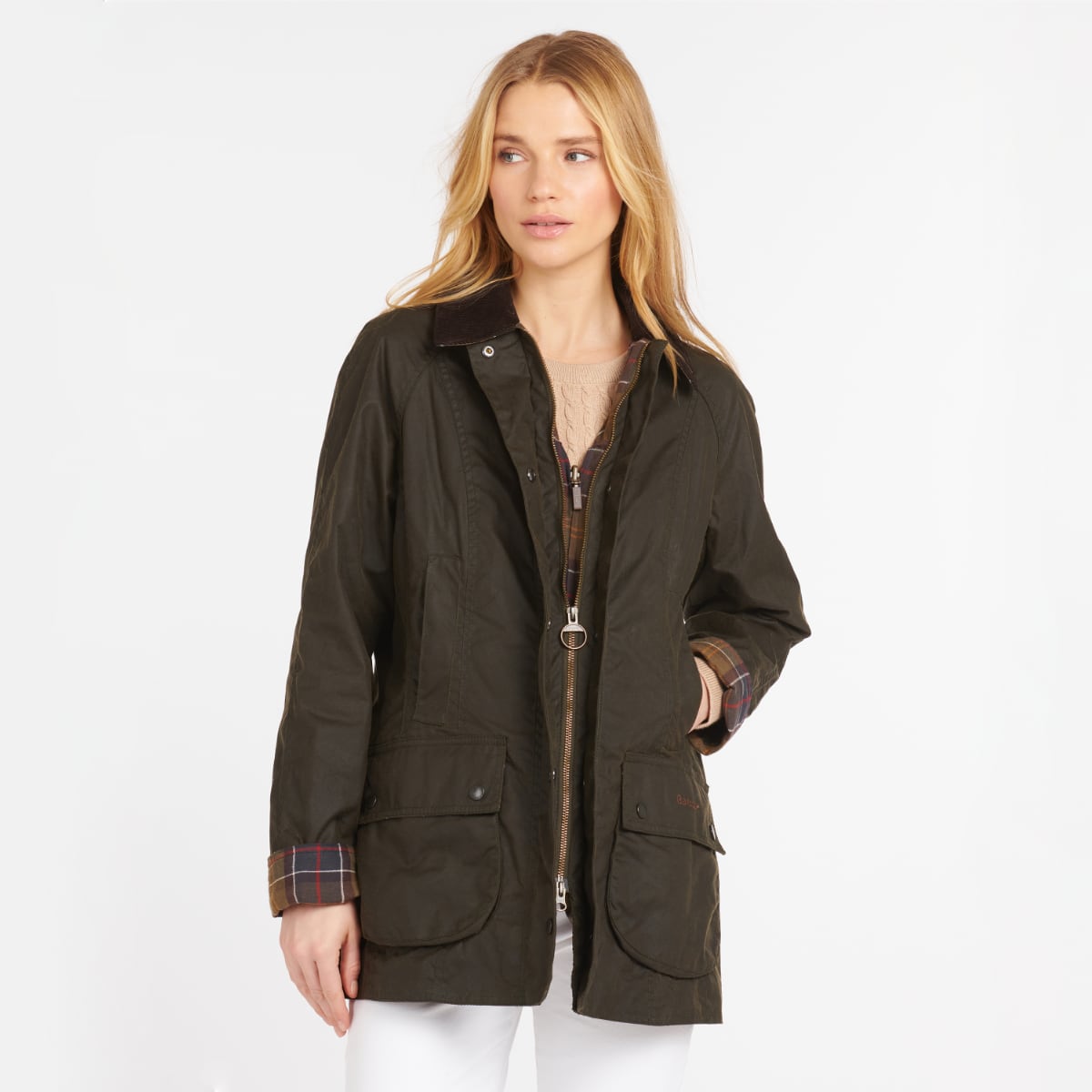
Barbour Classic Beadnell Waxed Jacket
The Classic Beadnell also uses traditional 6oz Sylkoil waxed cotton. Its outer provides useful protection in showers, with periodic re-waxing helping to maintain the finish and weather resistance.
View the Classic BeadnellOther examples include the more tailored Barbour Beacon Sports Men's Waxed Jacket and the colder-weather Barbour Winter Defence Women's Waxed Jacket. These illustrate why it is important to consider the whole garment rather than assuming every wax jacket has the same fit, warmth or intended use simply because the outer fabric is waxed.
How should you care for a wax jacket?
Traditional Barbour waxed cotton should not be treated like an ordinary washable cotton coat.
For classic waxed jackets, the outer is normally sponge cleaned using cold water rather than put through a washing machine with ordinary detergent. Conventional washing can strip the wax finish that provides the jacket's characteristic weather resistance.
Allow the jacket to dry naturally and inspect the wax periodically. When areas become dry or the fabric stops shedding rain effectively, re-waxing can replenish the finish.
Do not machine wash a traditional Barbour wax jacket unless the care label for that exact garment specifically says otherwise. Always follow the individual product care instructions, as different Barbour materials require different treatment.
If you are re-waxing at home, work methodically across the jacket and pay particular attention to dry areas, seams and creases. Our complete Barbour wax-jacket care guide explains the process step by step.
Frequently asked questions
Are Barbour wax jackets waterproof?
Traditional Barbour waxed jackets are better described as weather-resistant rather than equivalent to fully waterproof technical shells. A well-maintained wax finish provides useful resistance to showers and changeable weather, but prolonged heavy rain may call for a purpose-built waterproof jacket.
Does a wax jacket become less water-resistant over time?
Yes. The wax finish gradually wears and dries with use. As that happens, the jacket's ability to repel rain reduces. Periodic re-waxing helps restore the protective finish.
How can I tell if my wax jacket needs re-waxing?
Look for dry, pale or patchy areas and pay attention to whether rain still beads on the surface. Shoulders, elbows, cuffs, seams and pocket edges often show wear before less exposed areas.
Can you wear a wax jacket in heavy rain?
You can wear one in rain, but a traditional wax jacket is not the best choice when you expect sustained heavy rainfall and need dependable technical waterproof protection. A genuine waterproof shell is better suited to those conditions.
Can you make a wax jacket more waterproof by adding more wax?
Re-waxing can restore the water-repellent finish where it has become dry or worn, but it does not turn a traditional waxed-cotton jacket into a seam-sealed technical waterproof shell. Apply the correct amount of wax according to the manufacturer's instructions rather than simply adding increasingly heavy layers.
Can you wash a Barbour wax jacket in a washing machine?
Traditional Barbour waxed-cotton jackets should not normally be machine washed. Sponge clean the outer with cold water and follow the care label for the exact garment. Machine washing or ordinary detergent can remove the wax finish.
Are wax jackets windproof?
Waxed cotton provides useful resistance to wind in normal everyday and countrywear use, but performance varies by jacket construction. It should not automatically be described as technically windproof unless the individual garment specification supports that claim.
How often should you re-wax a Barbour jacket?
There is no single interval that suits every owner. Re-wax when the finish shows signs of drying or when the jacket no longer sheds rain as effectively as it should. A frequently worn jacket may need attention sooner than one used occasionally.
Keep the wax working as it should
A traditional wax jacket can provide dependable protection for everyday showers and changeable weather, but that performance relies on maintaining the wax finish. Learn how to clean, re-wax and store your jacket correctly in our complete care guide.
Read our Barbour wax-jacket care guide